
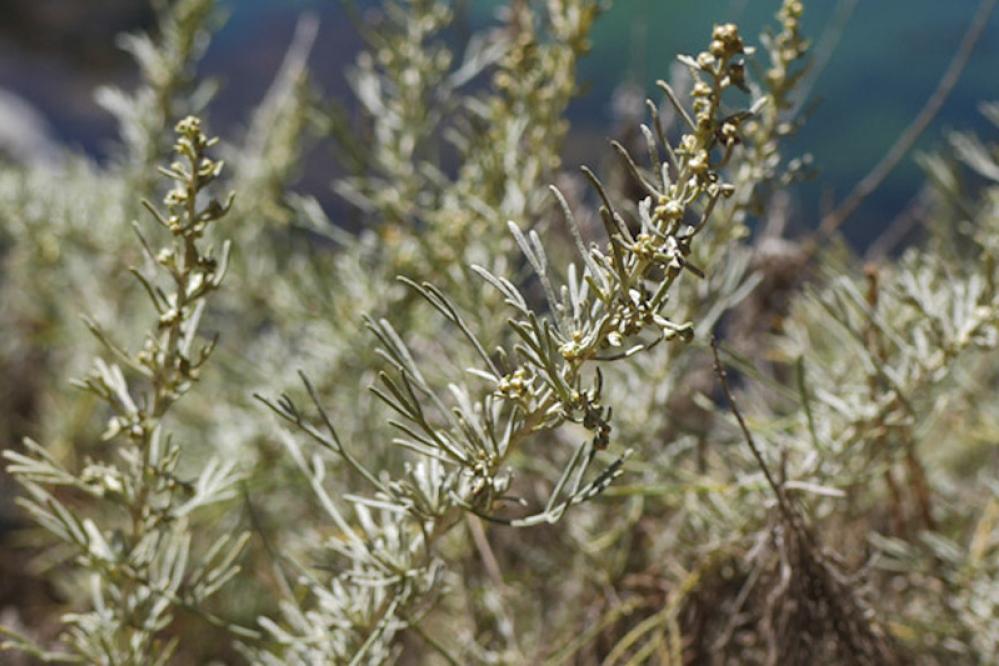
Photo credit: ©Kip Evans
This plant is found in great abundance in the coastal scrub. Growing 2 to 5 feet tall, it has woody lower branches and is drought resistant. Though highly flammable, it often grows back after fires. While not a true sage, i.e., not a Salvia, the thread-like leaves do have a delicious sage-like odor thanks to its terpene oils. However, this shrub makes a horrible “neighbor” as its oils also interfere with the growth and reproduction of plants around it.
Sagebrush is perhaps the most important component of the coastal scrub. Birds, insects, reptiles, amphibians and mammals find it is a vital resource for nesting materials and food. It also provides them shelter from predators. Native Americans widely used sagebrush medicinally for both menstrual and respiratory disorders. They also used it dried as a burning smudge during purification rituals, as many people still do today.