
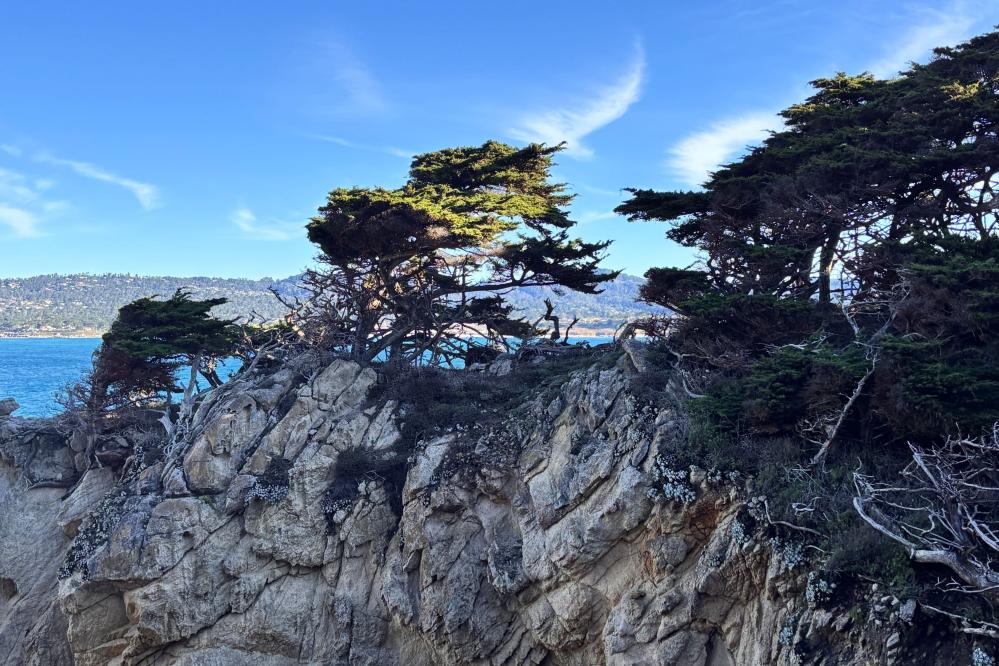
Monterey Cypress trees growing out of a rocky cliff on the North Shore Trail at Point Lobos. Photo by Ernie Long.
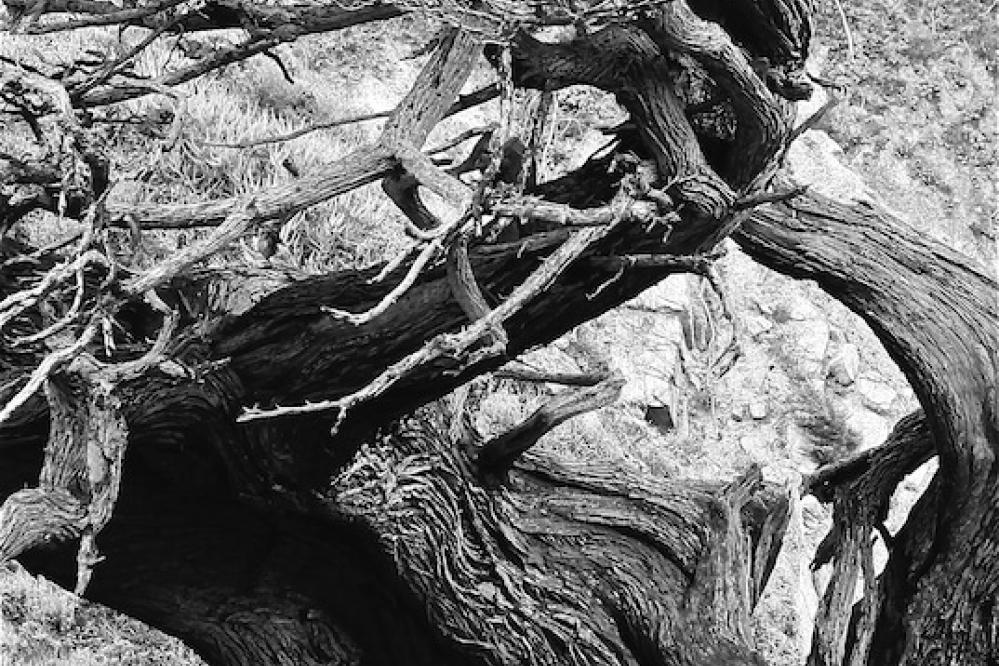
Weathered Monterey Cypress at Point Lobos. Photo by Fred Brown.
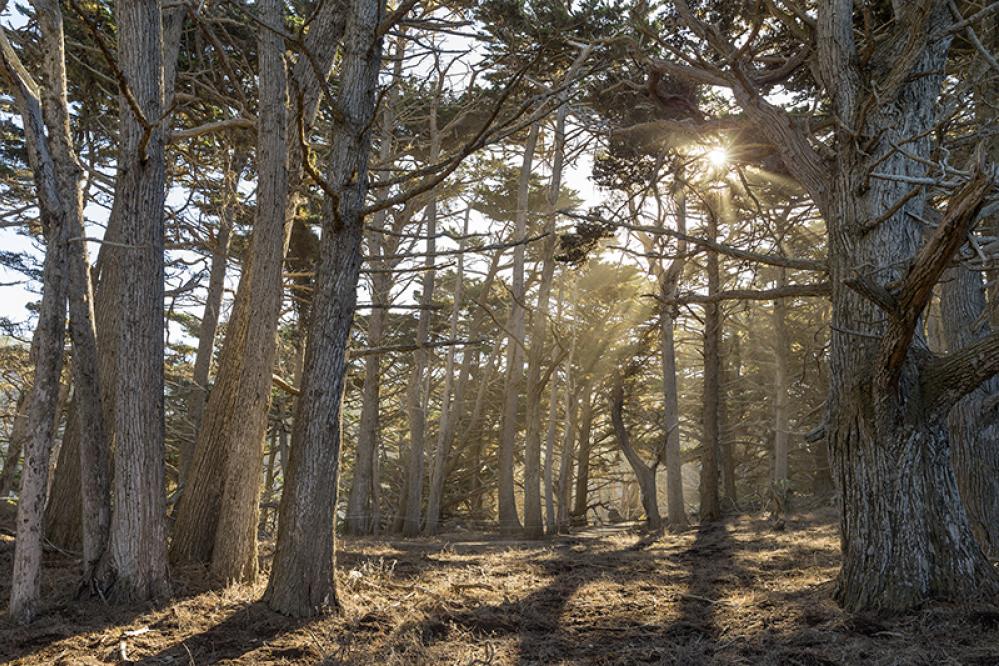
Photo credit: ©Kip Evans
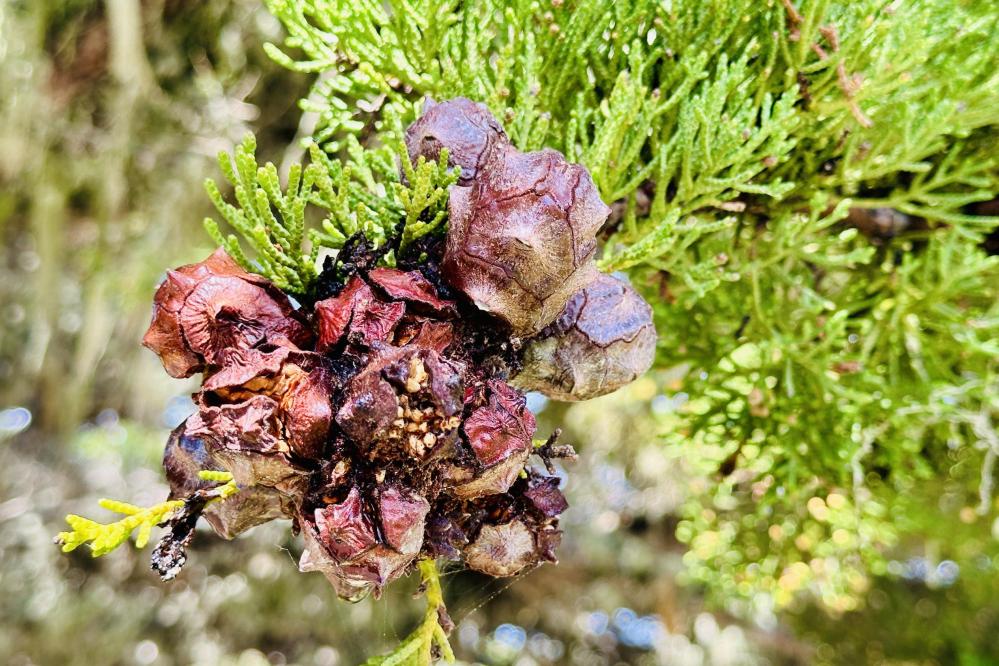
Female seed cones of the Monterey Cypress tree. Photo by Castel Ortiz.
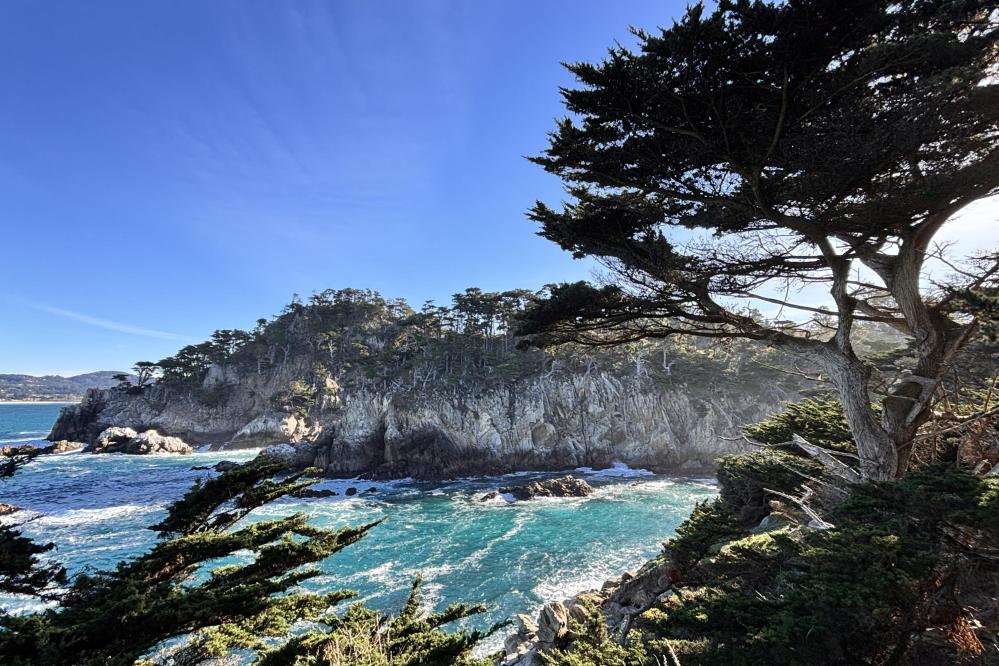
Monterey Cypress trees ringing Cypress Cove at Point Lobos. Photo by Ernie Long.
Visitors to Point Lobos are familiar with the Monterey cypress (formerly Hesperocyparis macrocarpa), perhaps the terrestrial symbol of the reserve. We see the cypress all around the Monterey peninsula and forget how unique it is. There are only two native stands: one at Allan Memorial Grove in Point Lobos and the other at Crocker Grove in Pebble Beach. California lists it as a Category 1 rare and endangered species, but since it is widely planted as a landscape tree, it is not on the federal list of endangered species – the federal list does not distinguish between natural populations and planted specimens.
Cypresses in the Allan Memorial Grove at Point Lobos are especially valuable because of their isolation from planted cypresses originating from other areas. As close as Pebble Beach is to Point Lobos, there are genetic differences between the two populations and minor variations in cone structure. Because they are surrounded by a residential area, cypresses in the Del Monte Forest (Pebble Beach) are also more likely to hybridize with cypresses planted as landscape trees. Monterey cypresses typically live 200 or more years; individual trees could possibly live as long as 400 years.