
Bush Lupine (also known as Yellow Bush Lupine) is a striking perennial shrub native to the coastal dunes and bluffs of California. It grows in height from 3 to 7 feet.
Bush Lupine blooms in Spring to early Summer with bright yellow flowers. Occasionally these are blue or lilac.
NOTE: Lupines are toxic to both humans and animals! That's because every part of the plant contains alkaloids. Generally, Lupines are not dangerous to touch, but don't eat any part of this highly toxic plant. (Or lick your fingers after touching a Lupine.)
Bush Lupines are incredibly popular with bumblebees. If you watch a bush lupine in bloom, you’ll see bees landing on the "keel" of the flower, which pops open to dust the bee bellies with pollen.
It is a common sight to see a mix of colors on a single bush lupine. The flowers are changing from yellow to purple. Nature is providing bees a clever "traffic signal." Yellow means Open for Business: These flowers are young, full of fresh pollen, and have a receptive stigma.
Purple or red flowers signals to bees that the flower is closed. Once the flower has been pollinated or becomes too old to produce viable seeds, the center spot of the flower changes to purple or magenta. Bees learn to ignore the purple "spent" flowers and head straight for the yellow ones. This saves the bee energy and ensures the plant's remaining pollen goes exactly where it's needed.
Bush Lupines don’t just drop their seeds; they launch them. When the seed pods dry out in the sun, they twist and snap with enough force to fling seeds several feet away from the mother plant.
The name Lupine comes from the Latin word lupus, meaning wolf. For centuries, people mistakenly believed that lupines "wolfed" all the nutrients out of the soil because they were often the only things growing in barren areas. In reality, the Lupines actually were healing the soil by adding nitrogen back into it!
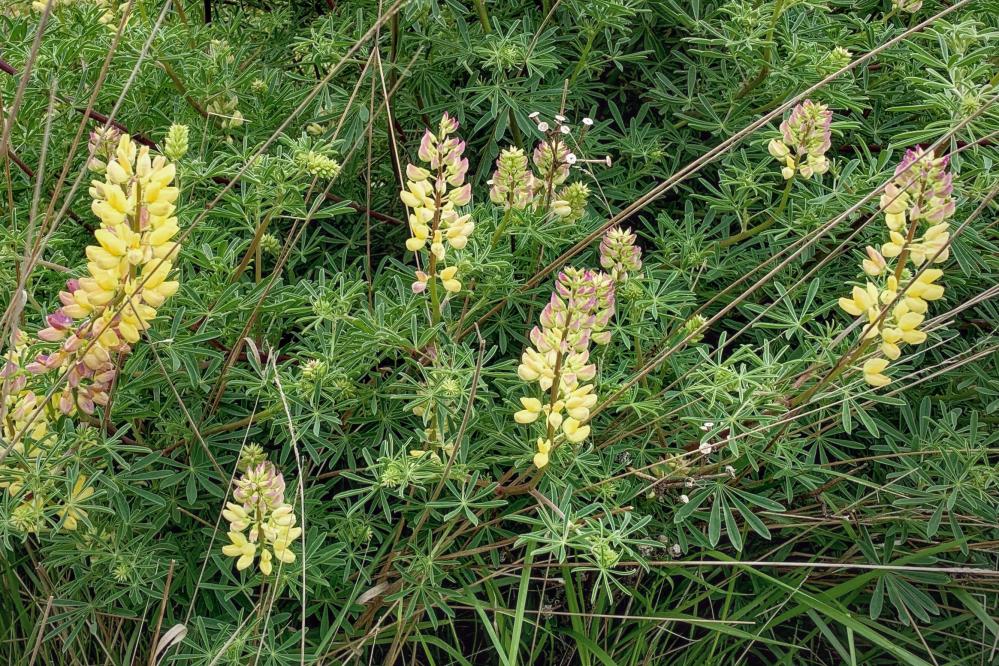
Photo by Don Blohowiak