Lizard Tail

Scientific Name:
Eriophyllum staechadifolium
Description

Also known as the seaside woolly sunflower, this shrub grows up to 1.5 m (5 ft) tall and exists along California’s coast. It is identifiable by its bright yellow, daisy-like flowers.

Fun Facts

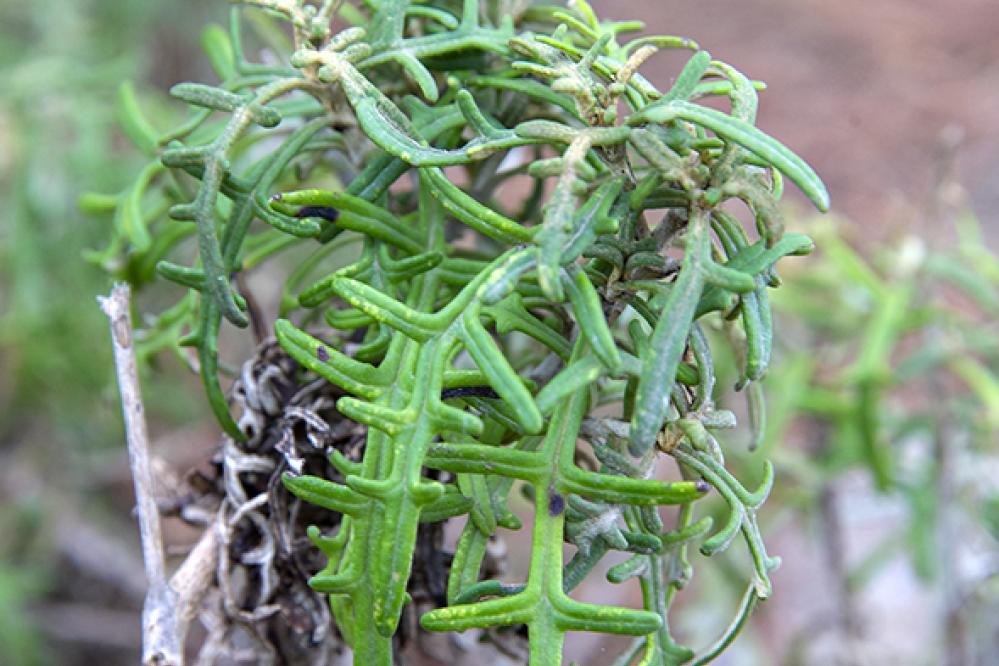
This plant gets its name from its leaves that resemble an upside-down lizard body. Lizard tail is an important coastal scrubland plant that is both long-term drought and sea spray tolerant.

Nature Topics
Further Reading

In the Asteraceae (sunflower) family, Lizard-tail is festooned with copious small, bright, yellow flowers in umbrella-like clusters from April to September. These delightful blossoms form a floral bouquet that provides bountiful nectar for butterflies, native insects and later seeds for birds. Some Native Americans used the dried and ground seeds to make pinole, a ground meal. They also placed lizard-tail leaves on their bodies to relieve sore areas.

Lizard-tail is a handsome drought-tolerant small shrub.  Because it is also wind and salt-spray tolerant, this is an important sun-loving member of the coastal scrub lands. It is usually 2 to 3 feet in height, and most often has a mounding form about 2 to 3 feet wide. The green foliage of its many branches is garnished with fine wooly hairs under the leaves giving them a silvery contrast. The common name “lizard-tail” likely refers to the end of the often many-lobed and round-edged leaves, which bear a striking resemblance to the body of a lizard. Its close cousin Eriophyllum confertiflorum, frequently called Golden Yarrow, has smaller leaves; it is also found in the reserve but is much more common inland.

Lizard Tail relies on