
Also known as “rattle weed,” Nuttall’s locoweed is a leafy plant with cream-colored flowers, sometimes with a lavender tint. The stem may be covered in fine hairs, and the leaves are grayish on the coast when exposed to salt spray. It grows in thick, tangled, often sprawling clumps. Depending on the environment, the stems can reach up to 1 meter (3 feet) in length.
Like many milk vetches, Nuttall's Locoweed produces "rattleweed" pods. These are inflated, bladder-like legume pods (up to 6 cm long) that become papery and dry when mature, containing several seeds that rattle inside when shaken.
Locoweed is a legume, which means bacteria live around its roots and provide it with important nutrients like nitrogen. Another example of a legume is a peanut.
The name locoweed comes from the Spanish word loco (crazy). Many plants in the Astragalus genus contain a neurotoxin called swainsonine. When livestock (horses, cattle, or sheep) graze on these plants over a long period, they develop "locoism," a condition characterized by: Erratic behavior and nervousness and loss of coordination or staggering.
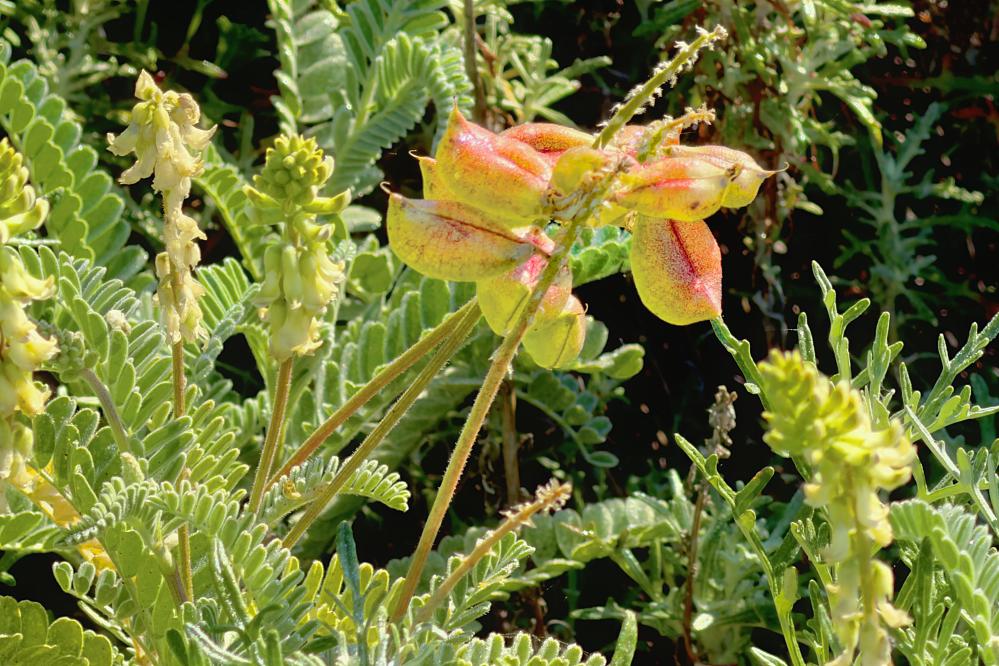
Photo by Don Blohowiak
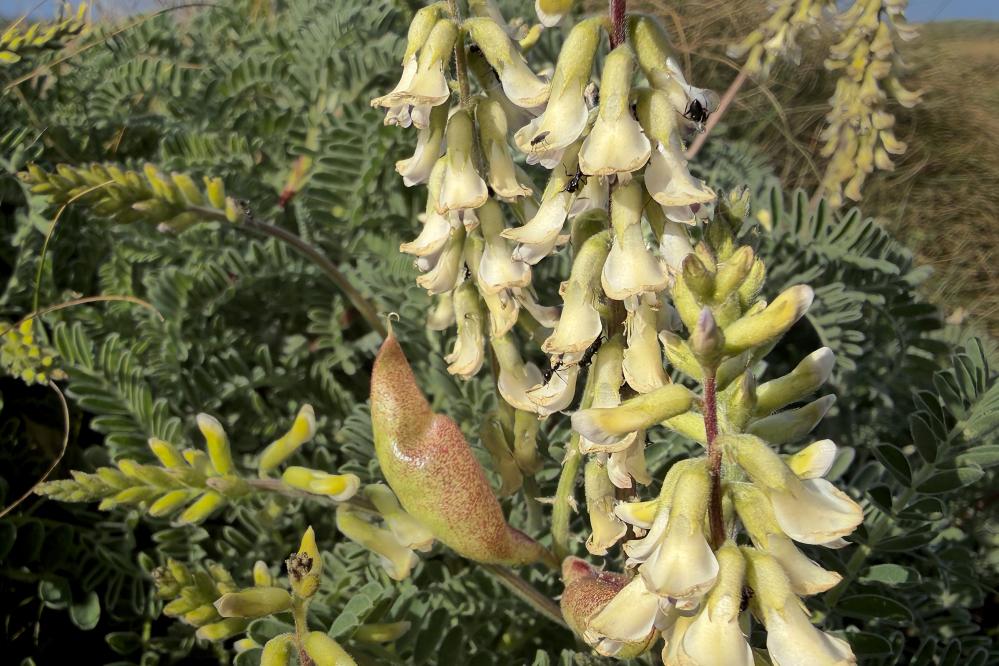
Photo by Don Blohowiak
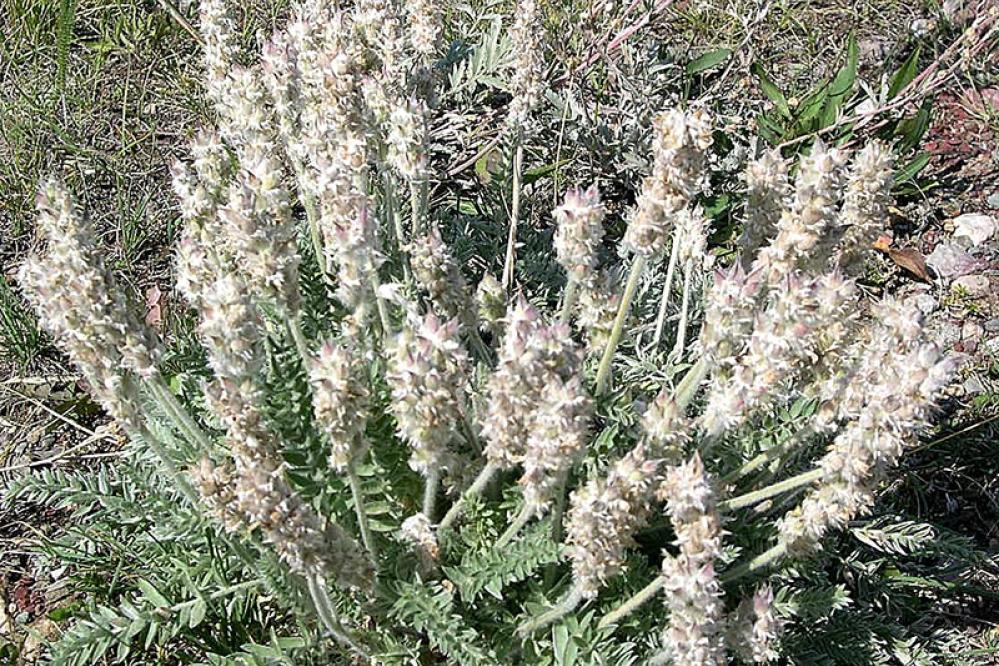
Photo credit: ©Kip Evans
Nuttall's Locoweed relies on
 Sun
Sun Water
Water Nutrients