
Sand Hill Sage or Coastal Sagewort, is a hardy perennial subshrub native to the coastal dunes of the western United States. It is one of the few plants that can handle direct salt spray from the ocean, making it a staple for coastal restoration. Typically, Coastal Sagewort grows between one to two feet (30–60 cm) tall. It tends to form a rounded, mounded shape, spreading about two to three feet (60–90 cm) wide.
The plant is famous for its striking silvery-blue to pale grey foliage. This isn't just for looks; the color comes from a dense covering of tiny white hairs that reflect sunlight and trap moisture.
The foliage of Coastal Sagewort is incredibly soft and "feathery." The leaves are divided into narrow, thread-like segments, giving the plant a woolly, cloud-like texture.
The soft, silver hairs of the Coastal Sagewort foliage act as natural sun protection, shielding the plant's internal tissues from the intense UV rays found on open beaches.
Despite the common name, Coastal Sagewort isn't a "true" sage (genus Salvia). It’s actually a member of the sunflower/daisy (Asteraceae) family!
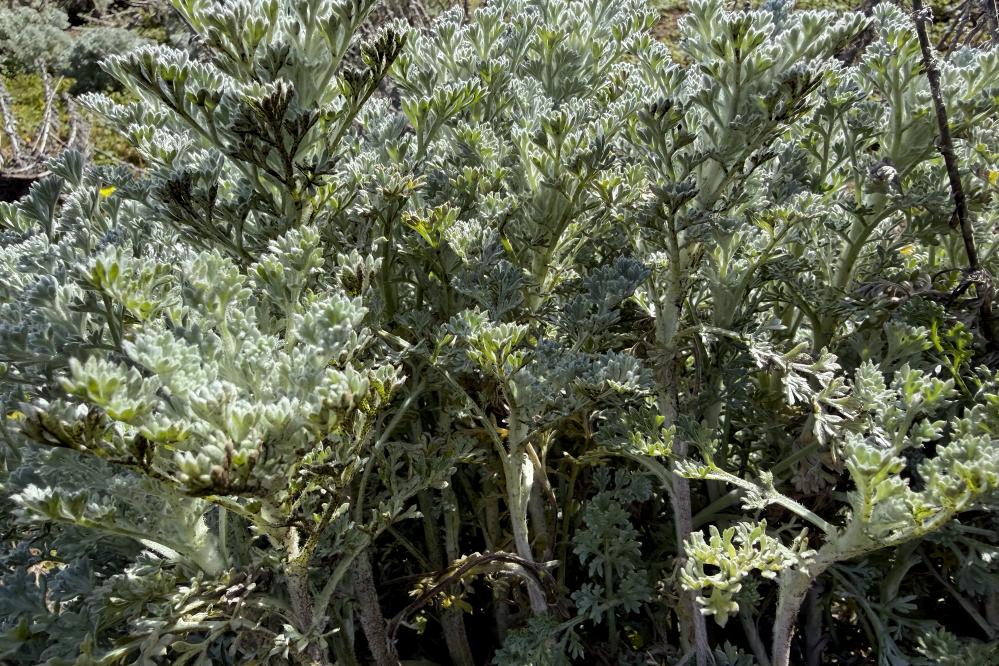
Photo by Don Blohowiak
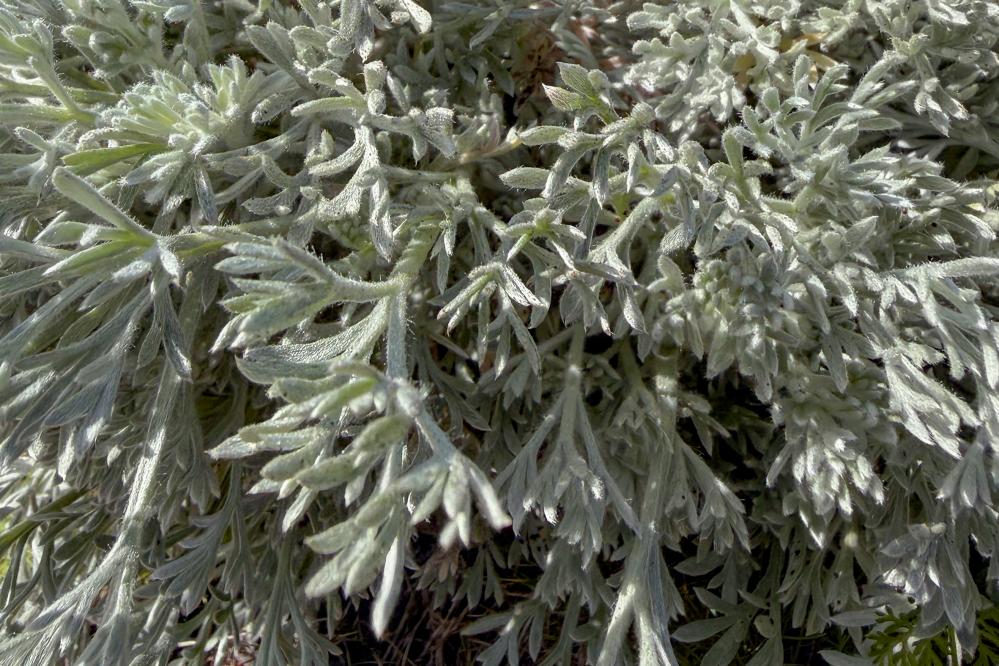
Photo by Don Blohowiak
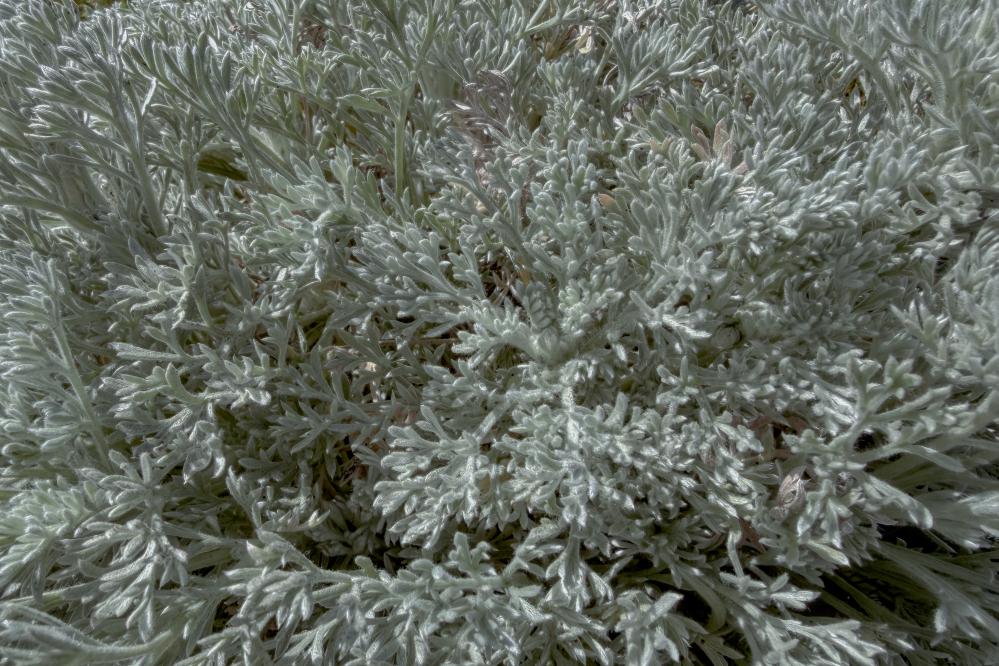
Photo by Don Blohowiak
Sagewort (Sand Hill Sage) relies on
 Sun
Sun Water
Water Nutrients