
Song Sparrows are medium-sized sparrows with brown streaks over a white chest. Most individuals have a characteristic dark "stick-pin" spot right in the center of their breast.
Because they are found in so many different environments, the Song Sparrow is one of the most physically diverse birds in North America. Their size and weight can vary significantly depending on the subspecies. Unlike the "giant" sparrows of Alaska or the tiny desert varieties, Song Sparrows at Point Lobos are medium-to-small in size (13 to 15 cm, or 5.1 to 5.9 inches) and are known for being generally darker and more "olive-brown" than those found inland. This helps them blend into the foggy shadows of dense riparian thickets and coastal scrub.
You’ll often hear them before you see them, as the males in this region are famous for singing nearly year-round.
Song Sparrows primarily forage for their food. You’ll often see them hopping on the ground or scratching through leaf litter to find seeds and insects. During the summer, their diet shifts heavily toward protein-rich insects like beetles, caterpillars, and spiders to help raise their chicks.
If you see a small brown bird flying a short distance with a distinctive downward pumping motion of its tail, you're almost certainly looking at a Song Sparrow.
A male Song Sparrow doesn't just "chirp"; it has a repertoire of up to 20 different songs and can produce hundreds of variations on those themes. They use these complex melodies to claim territory and attract mates.
Song Sparrows have dialects. A sparrow in Maine will sound noticeably different from one at Point Lobos in California. Song Sparrows learn their songs by listening to the "neighborhood" birds when they are young.
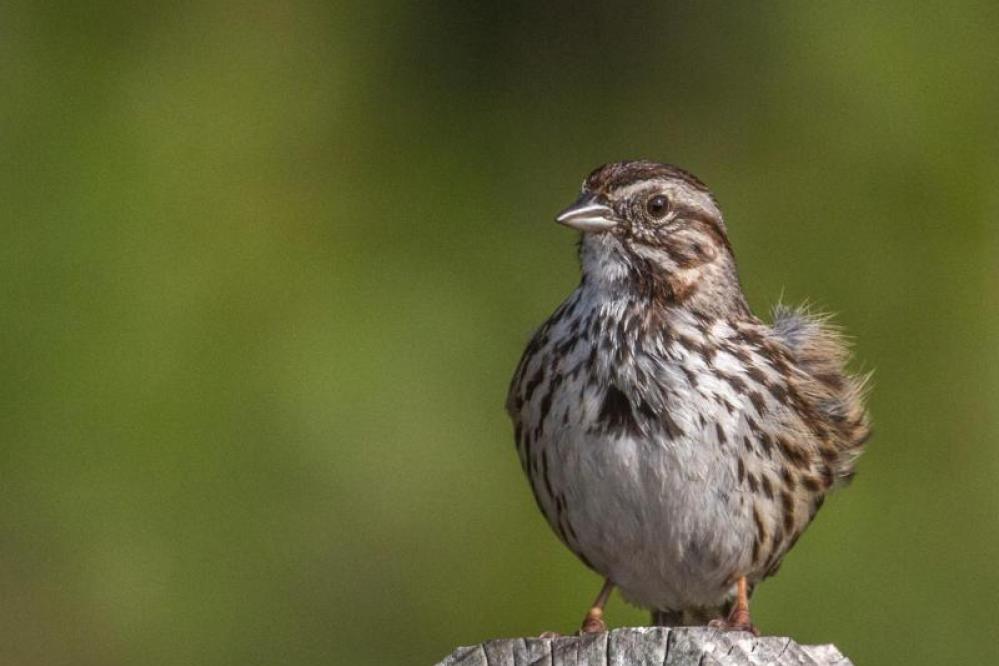
Photo by John Drum