
The Striped Skunk is a small mammal; between 52–77 cm (20–30 inches) in total body length; usually weighing 1.8–4.5 kg (4.0 to nearly 10 pounds).
The Striped Skunk is one of the most recognizable creatures in North America. Not only do Striped Skunks look distinctive, they possess musk-filled scent glands to ward off predators.
Striped Skunks wield their intensely odious spray as a defensive weapon. Their scent glands are equipped with nipples that allow them to aim their spray at a predator with accuracy up to 15 feet (4.5 meters).
Before spraying, a striped skunk will usually give a fair warning. It will stomp its front feet, hiss, and arch its back. If you see that, retreat without startling or frightening the skunk.
The skunk's odiferous spray doesn't just smell bad; it is highly acidic and can cause temporary blindness and intense stinging if it hits a predator's eyes. (Don't stalk skunks!)
The striped skunk is one of the major carriers of the rabies virus, accounting for 25% of annual cases.
Striped skunks inhabiting California's coastal areas will feed on crabs and beached fish.
Most predators (such as coyotes or foxes) learn to leave skunks alone after one encounter. However, the Great Horned Owl has a very poor sense of smell and is the striped skunk’s primary predator, often snatching them from above before the skunk can even aim its noxious spray.
The scientific name for this mammal is Mephitis mephitis. The (repetitive) name is derived from the Latin word mephit, which translates appropriately to "foul odor." Striped Skunks belong to the family Mephitidae, a group that also includes stink badgers.
The Cree and Ojibwe word shee-gawk is the root word for Chicago (as in Illinois), which means 'skunk-land.'
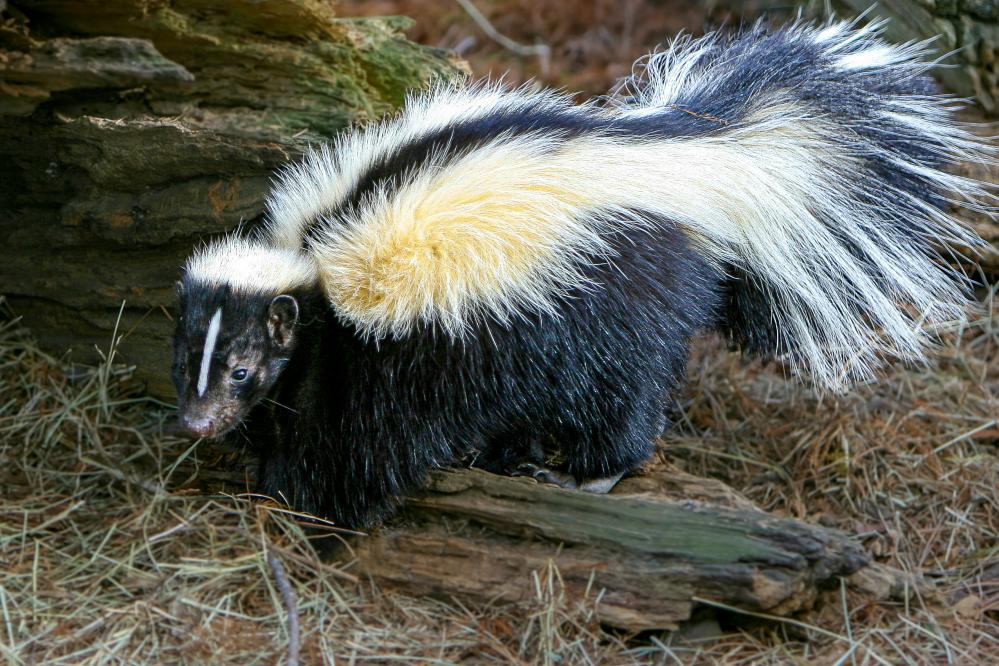
Photo by Bryan Padron on Unsplash.