Algae, Fungi and Lichen
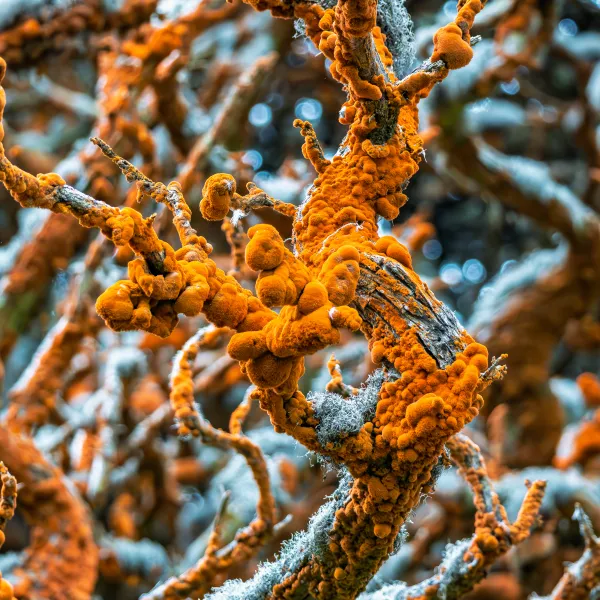
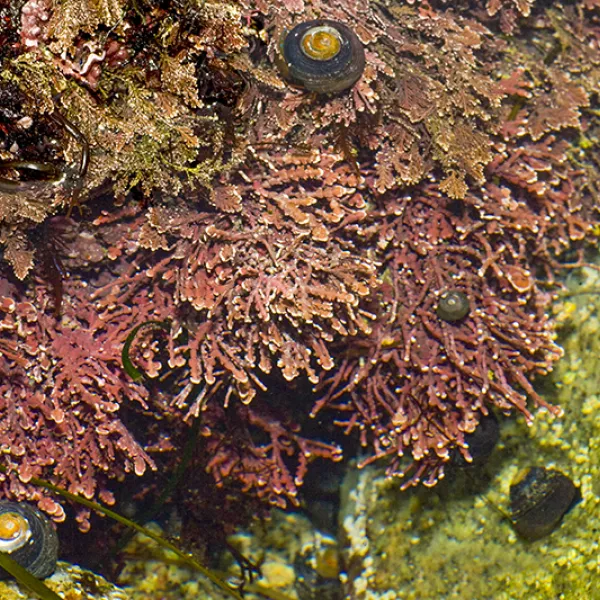
Algae are found in many forms, from the huge, fast-growing microalgae like giant kelp and bull kelp in the ocean to microscopic algae floating free in the water. Both photosynthesize to produce oxygen and sugars. Giant kelp grow from a “holdfast” that has attached itself to rocks on the bottom and are pulled to the surface by gas bladders that provide buoyancy. One form of algae elicits many questions from visitors who mistakenly identify it as a fungus and assume (possibly due to its rusty-red color) that it is killing the trees on the Cypress Grove trail. Not so. It is really algae that migrated to Point Lobos as tiny spores, named Trentepohlia. It grows very few places on earth and only on the northern edge of Point Lobos. Since it only thrives in pristine air, be sure to fill your lungs when you are there. Ask any docent where to find it.
The most commonly identified fungi are mushrooms. A wide variety of mushrooms appear after our winter rains have started.
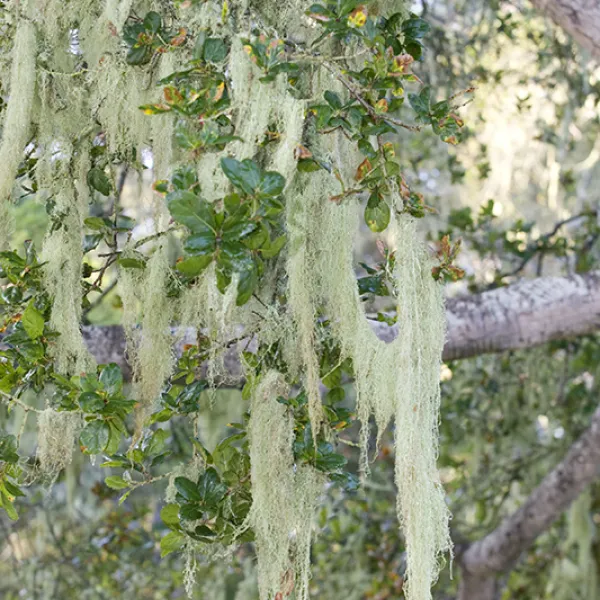
Lichen (pronounced “liken”) is a symbiotic life form composed of both algae and fungi. The fungus forms the structure to provide a “home” for the algae, and the algae’s photosynthesis produces sugars that feed both. There are roughly 15,000 different lichens on earth. At Point Lobos, they are most evident in trees and on rocks, and the most obvious lichen is lace lichen, hanging on trees like as “old man’s beard”, a common name for it. People who have been to the US Southeast frequently confuse lace lichen with Spanish moss, which is parasitic while lace lichen is not. Some birds use it to make a soft nest for their eggs, and Native Americans used it to cushion their babies. Since it is very absorbtive, it was also used in diapers – when soiled it was completely biodegradable. You can find it throughout the reserve on pines, cypresses and oaks.