Lace Lichen

Scientific Name:
Ramalina menziesii
Description

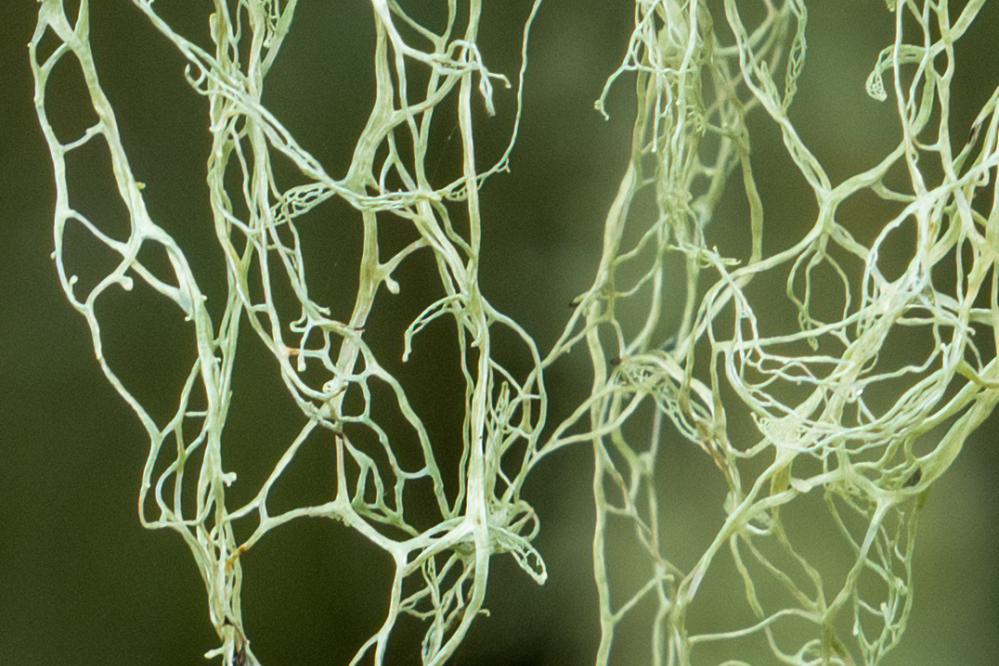
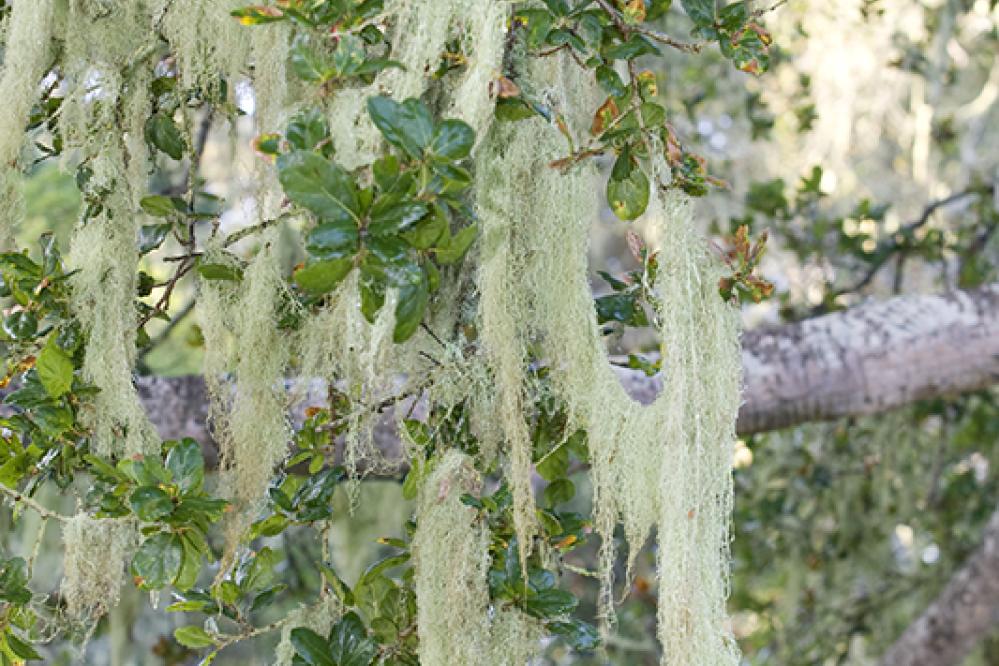
A combination (multipartner symbiotic relationships) of an alga and a fungus and bacteria. Around Point Lobos, it appears like a lacy, pale gray to green web that hangs from many trees in the Reserve.

Behaviors

In this symbiotic relationship, the fungus provides structure for the alga, while the alga carries out photosynthesis to produce food for the fungus.

Fun Facts

More symbiosis! The lace lichen that hangs from trees captures moisture from passing fog, then the water drips to the ground, watering the tree. The tree provides the lichen with a home, while the lichen provides the tree with extra water during dry periods. Lace lichen provides important nesting material for birds and in 2015 it becames California's official state lichen.
Further Reading

Lichen (pronounced “liken”) is a symbiotic life form composed of primarily of algae and fungi. Recently, scientists have determined that bacteria play a role in forming this multi-species organism as well. The fungus forms the structure to provide a “home” for the algae, and the algae’s photosynthesis produces sugars that feed both. 

There are roughly 15,000 different lichens on earth. At Point Lobos, they are most evident in trees and on rocks, and the most obvious lichen is lace lichen, hanging on trees like as “old man’s beard”, a common name for it. People who have been to the US Southeast frequently confuse lace lichen with Spanish moss, which it  is not. (Spanish moss, by the way, isn't a moss. It is a member of the Bromeliaceae family, and reproduces through seeds and vegetative means, while true mosses reproduce via spores.)

Some birds use lace lichen to make a soft nest for their eggs. You can find it throughout the reserve on pines, cypresses and oaks.

Lace Lichen relies on