Humpback Whale

Scientific Name:
Megaptera novaeangliae
Description

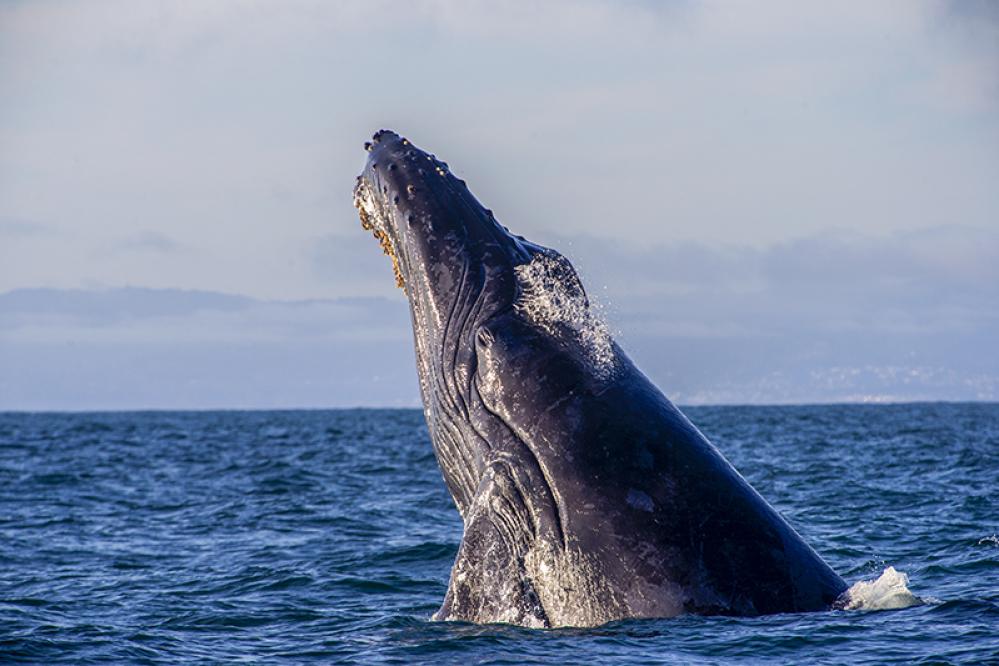
Measures over 15 m (50 ft) long, with dark blue-black skin covered with barnacles, extremely long pectoral (side) fins, and a small dorsal (upper) fin.

Behaviors

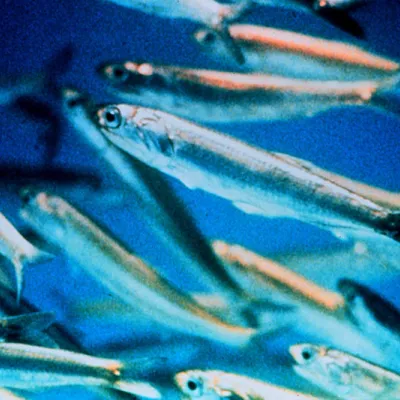
Humpbacks use the baleen (long, whiskery plates in their mouth) to filter feed on animals like small fish, krill, and plankton. They oten "breach" high out of the water, which scientists believe may be an attempt to knock off pesky barnacles that attach to their skin and to scare prey into tight groups. Also famous for their extended songs (10-20 minutes), which can be heard for miles underwater.

Fun Facts

Their scientific name, Megaptera novaeangliae, means "long-winded New Englander."

Further Reading

Humpback whales (Megaptera novaeangliae) and blue whales sightings are what many visitors think of as “seeing a whale.” Breaching, aerial acrobatics, fin slapping and those awesome spouts are the ultimate whale sighting experience. By contrast, the gray whales can reliably be sighted during their southern and northern migrations, but these animals are intent on getting to a destination and are spotted as they swim determinedly past Point Lobos. Humpback whales are following abundant food sources and with full bellies and no place to be, they breach, flap, and generally make a show of themselves. The favored foods of humpback whales are anchovies, squid, sardines, herring, krill – basically any small fish that swims in schools – and their baleen is used to take huge mouthfuls of fish and water, filter the water through the baleen back into the ocean, and swallow the retained fishes. A mature humpback whale will eat about 4000-5000 pounds of fish a day. Many of these calories are stored as blubber (fat) which insulates the animal as well as provides energy stores. An excellent example of humpback whale baleen is displayed outside the Whaling Station Museum at Whaler’s Cove.