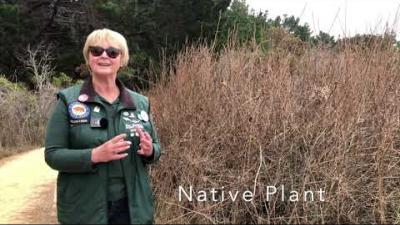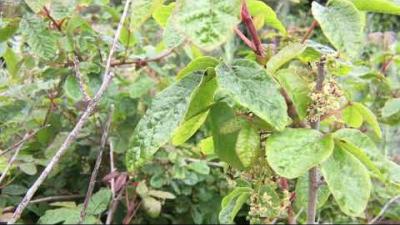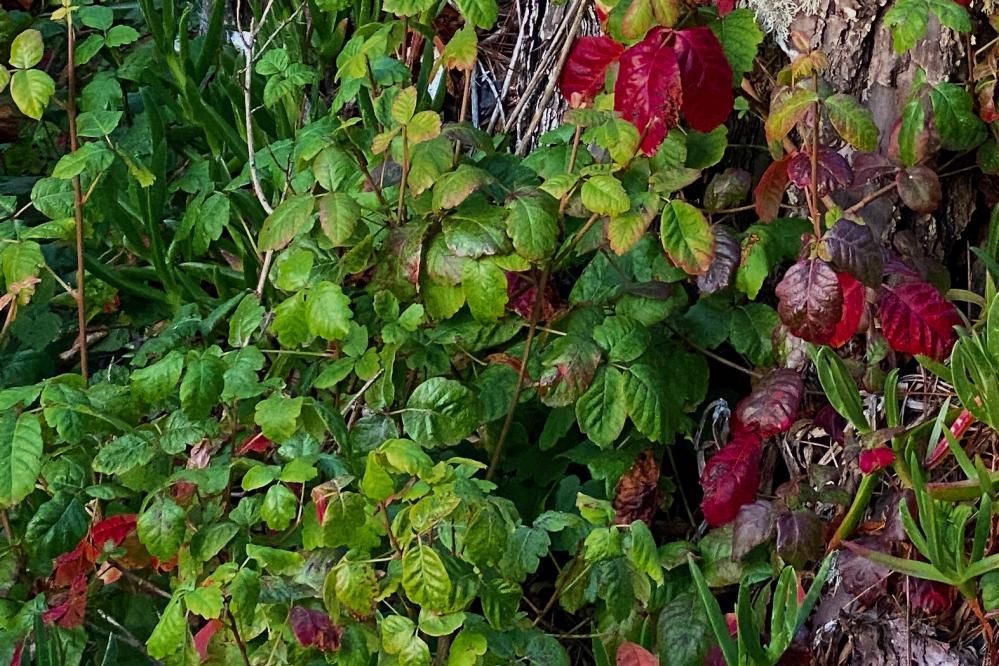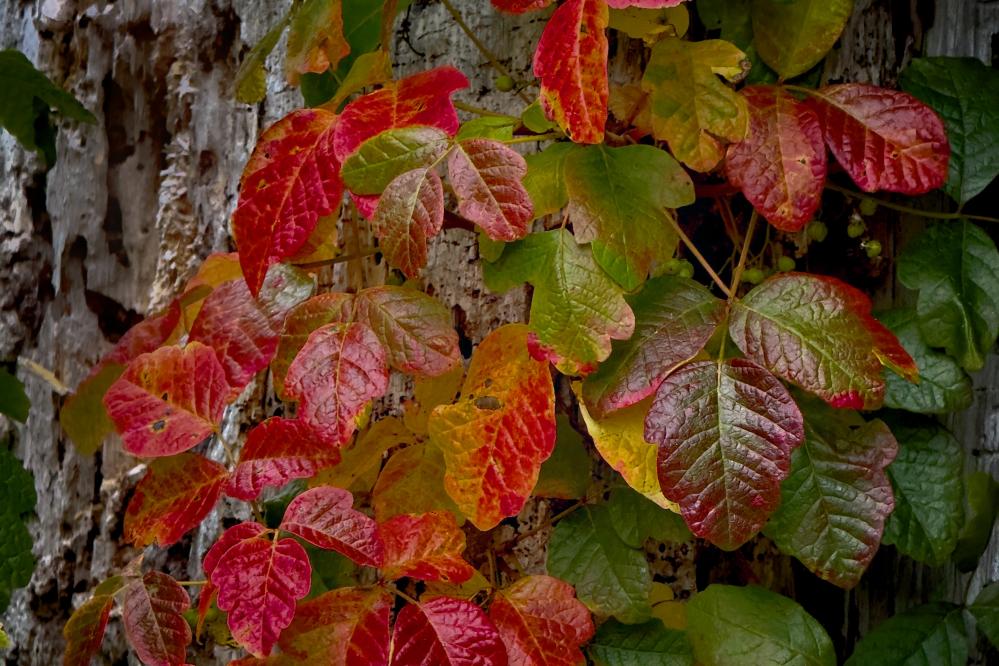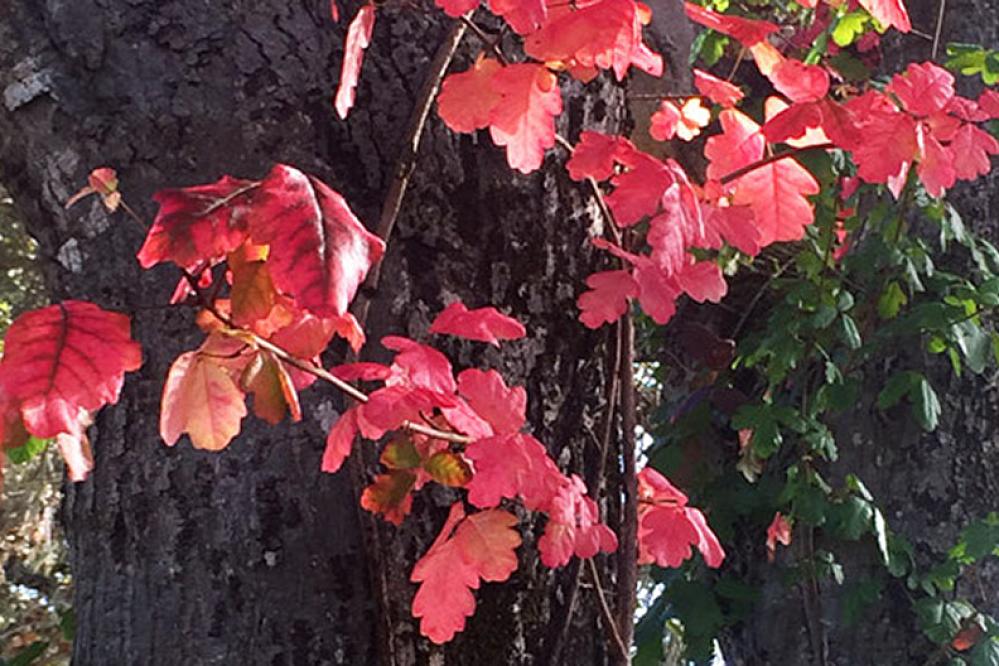
This plant thrives and is an integral and important native plant in the Reserve and surrounding lands. Many animals use it for both food and protection from predators. It is a handsome addition to our flora with shiny green leaves which, in the fall, give us our best red-color scenery. The “leaves of three” are usually about 1 and 1/2 to 4 inches long with lobed, toothed, or scalloped edges and do resemble the lobed leaves of true oaks. Later in the season, all the leaves may be lost – deciduous – making identification far more challenging. Poison oak can be a 1 foot to over 10 feet tall, be a creeper on the ground, or a climbing vine going far up supporting trees, sometimes 30 feet or more. It can also form large masses of dense shrubs.
You need to be able to recognize this plant if you are visiting California wilderness areas, as touching it can cause an incredibly itchy, blistering, weeping, red bumpy rash that could turn into a secondary bacterial infection. The oil which causes an allergic contact-dermatitis reaction in the great majority of us can be transferred to your skin from both the leaves and the leafless branches. If you have children with you who love to touch everything, be sure to teach them about it or caution them to touch nothing!
Interestingly, Native Americans were not nearly as allergic and used poison oak in many ways, including basket weaving, making dyes, and medicinally for multiple disorders. California blackberry, another prominent inhabitant in the reserve with “leaves of three,” does not cause a rash; its thorns (or “hair” in ditty below) make it possible to distinguish it from poison oak.
Leaves of three, let it be!
If it’s shiny, watch your heinie!
If it’s hairy, it’s a berry!